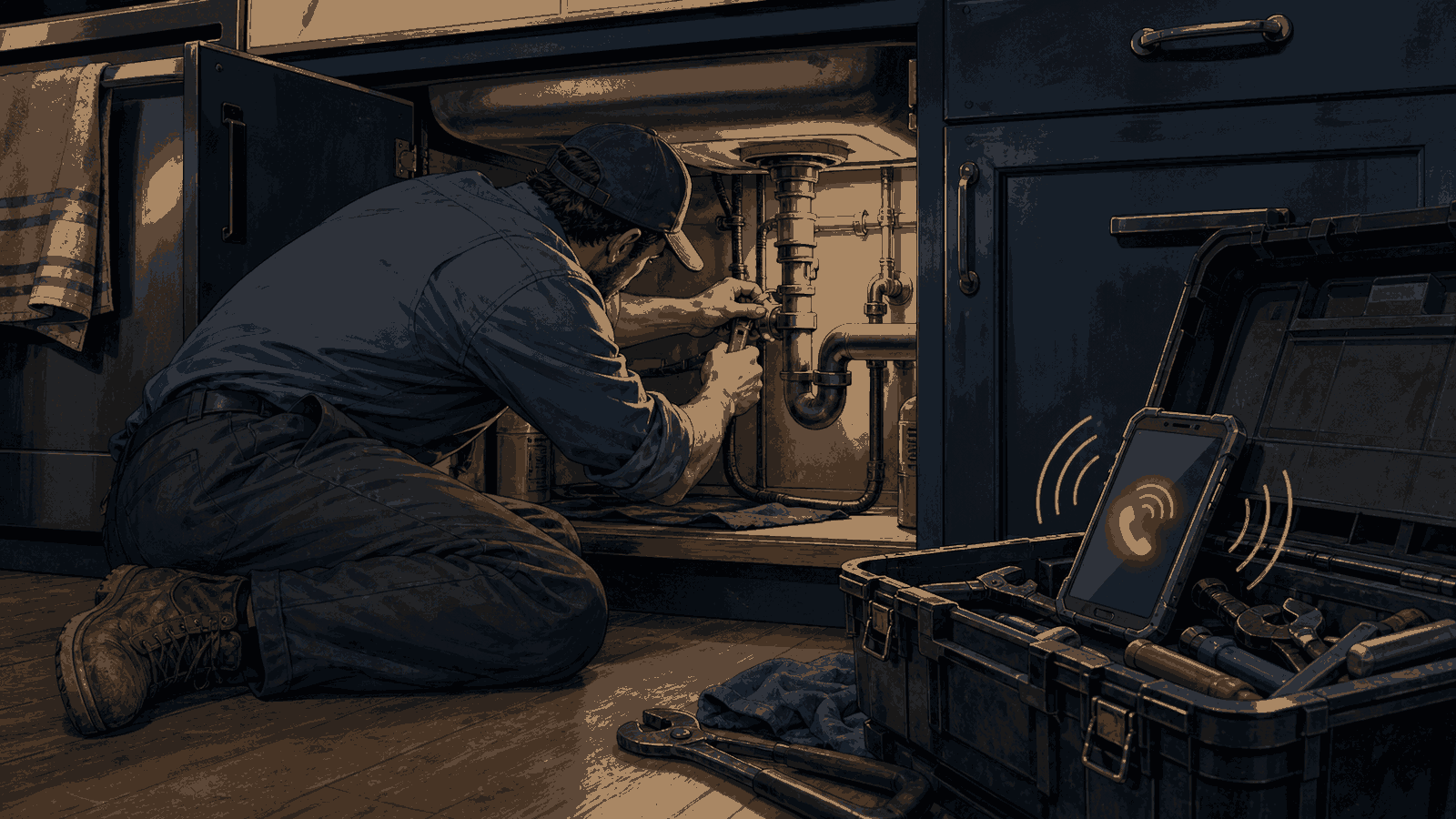
A plumbing company can have a full schedule and still lose some of its best calls after the office closes. Water heaters fail during showers. Supply lines split at night. Restaurants discover drain problems during service. The customer does not care that the office hours ended at 5:00 PM. They need a safe next step and a clear answer about what happens next.
An after-hours answering service for plumbers should do more than take a name and promise a callback. It should follow the shop's actual rules, distinguish urgent water damage from routine work, capture the details a technician needs, and route the call without making promises the company cannot keep.
This guide explains what to include, what to avoid, and how to judge whether after-hours coverage is worth paying for.
Start with the jobs you want after hours
Before choosing a service, define the work your company accepts outside normal hours. A clear list prevents the answering team from treating every call as an emergency or turning away work you would gladly take.
Common urgent categories include active supply-line leaks, burst pipes, sewer backups affecting the whole property, no water, failed sump pumps during heavy rain, and water heater leaks that cannot be contained. A clogged bathroom sink, a dripping faucet, or a quote request can usually wait for a normal appointment.
The exact list belongs to the owner. A two-truck residential shop may not offer overnight dispatch at all. A larger company may rotate an on-call technician. The answering process needs to reflect that operating model, not a generic plumbing script.
The 6 details every after-hours plumbing call needs
A useful call summary should let the on-call person make a decision without calling the customer back just to repeat the intake. At minimum, capture:
- The caller's name and best callback number.
- The complete service address, including unit number.
- The plumbing problem in the caller's own words.
- Whether water is actively flowing or causing damage.
- Any immediate safety concern the caller reports.
- The caller's preferred appointment time if the job is not urgent.
Photos can help later, but the phone conversation should not depend on the customer sending one. The first responsibility is to capture a reliable address, contact number, and description.
Emergency triage should be narrow
Triage does not mean diagnosing the plumbing system. It means placing the call into a category using rules approved by the plumber.
For example, the service can ask whether water is still running, whether the caller can safely reach a local shutoff, and whether the problem affects the whole property. It can repeat a shutoff instruction supplied by the company. It should not invent repair steps, estimate the cause, or tell a customer that a situation is safe.
If the caller reports gas, sewage exposure, electrical danger near water, or another immediate threat, the script should use the company's approved safety response and emergency escalation. The service must know when to stop scheduling and tell the right person now.
Message taking versus booking
Traditional after-hours services often send a message. That is better than voicemail because the customer speaks to someone and the owner gets structured details. The weakness is that the customer is still waiting for a callback without a confirmed time.
Booking can close that gap, but only when the calendar rules are simple enough to trust. The answering service needs approved appointment windows, service-area limits, job categories, buffers, and clear instructions about what cannot be booked.
A careful rollout starts narrow. Let the service book routine diagnostic windows in a defined area. Keep unusual commercial work, excavation, repipes, and emergencies on an escalation path. Expand booking after reviewing real calls.
Compare message capture with live booking
Core answers and sends the details. Pro can offer approved times and place the job on the calendar.
Compare TradesAnswer plansWhat does an after-hours answering service cost?
Pricing usually follows one of three structures: a flat monthly plan, a per-call plan, or a minute-based plan. A low base price can become expensive when call duration, transfers, holiday coverage, or message delivery are added.
Ask for the complete expected bill at your actual call volume. Include wrong numbers and existing-customer calls in the estimate because they still consume handling time with many services.
TradesAnswer uses flat plans at $349 per month for answering and qualification, or $499 per month when approved calendar booking is included. Both start with a 14-day pilot. The relevant comparison is not the cheapest monthly fee. It is the total cost compared with the value of qualified calls that would otherwise reach voicemail.
How to measure whether coverage pays
Track four values during the first month: eligible missed calls, qualified opportunities, booked jobs, and estimated first-ticket value. Keep spam, vendors, and existing-customer administration separate so the report does not inflate performance.
If 20 calls were forwarded, 8 were real new jobs, and 4 booked, the booking rate is based on the 8 qualified opportunities, not all 20 calls. Estimate recovered value using the shop's normal average ticket and label the number as an estimate until invoices are collected.
This approach makes the decision simple. If the service consistently recovers more gross profit than it costs, keep it. If the call volume is too low or the bookings are poor, change the rules or cancel.
Questions to ask before signing
- Can I hear full example calls, including difficult ones?
- Do I keep my existing business number?
- How are urgent plumbing calls identified and escalated?
- Who updates the script when our fees, hours, or service area change?
- Can the service book only approved job types and time windows?
- What happens when the caller asks for a price that is not in the script?
- Are recordings and transcripts available for review?
- What are the setup, usage, holiday, transfer, and cancellation charges?
- How quickly can I turn the service off if it is not working?
When after-hours coverage is not worth it
A shop with very low call volume may be better served by a disciplined callback routine. The same is true for a solo plumber who is already at capacity and does not want additional work. Coverage also struggles when every job needs the owner's personal judgment before any next step can be offered.
Review 2 weeks of phone logs before buying. Count the real opportunities that arrived while nobody could answer. That count, multiplied by a conservative close rate and average ticket, creates a reasonable ceiling for what coverage is worth.
The takeaway
A good after-hours answering service for plumbers is a controlled extension of the shop. It answers with the company name, follows written emergency rules, captures complete details, books only approved work, and escalates instead of guessing. Start with narrow rules, review the first calls, and measure booked value against the full monthly cost.